Sharp Edge: The Little Bottle of Brown Vinegar That Explains the Modern Pub
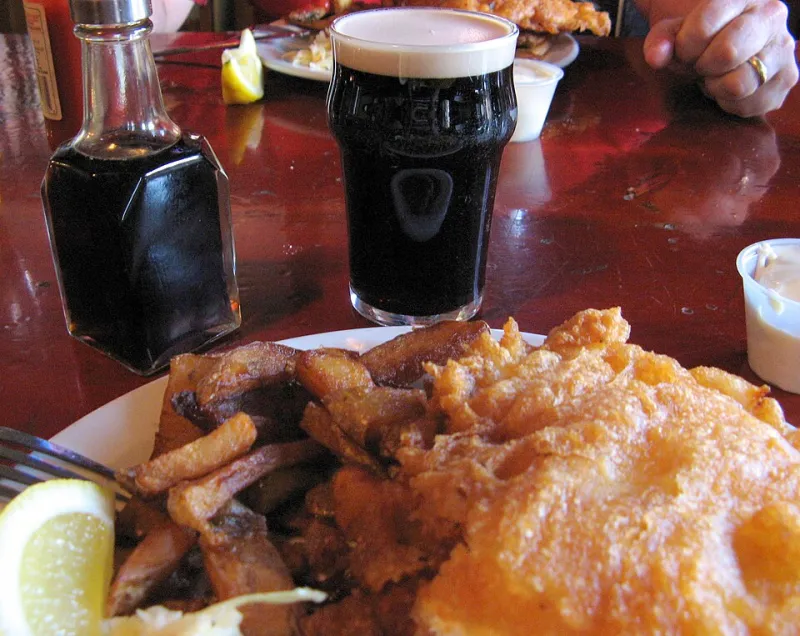
Photo: Andrea_44 from Leamington, Ontario , Canada, CC BY 2.0, via Wikimedia Commons
Look at our tables sometime. Salt shaker, pepper mill, and a small brown bottle that most guests walk right past. That bottle — malt vinegar — has done more quiet work for pub food than almost any condiment in the Anglo-American canon, and it deserves better than being ignored until someone orders the fish and chips.
So let's give it its due.
Born in the Brewery, Raised in the Chippie
Malt vinegar starts life as exactly what you'd guess: ale. Take beer, expose it to oxygen, and the alcohol-eating bacteria (the same ones behind kombucha, for the fermentation nerds) turn the booze into acetic acid. In industrial Britain of the 1800s, this was a way to salvage sour or over-produced ale. Waste not, sharp everything.
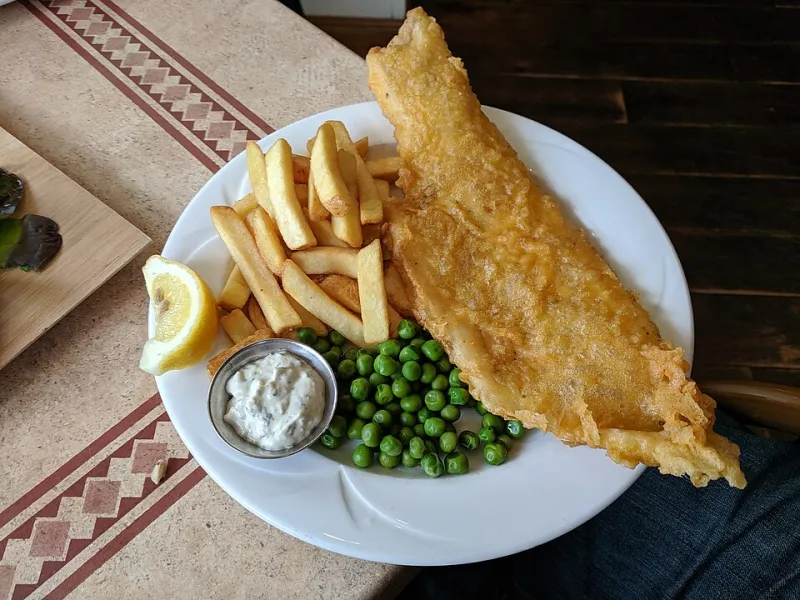
The condiment found its permanent home at the fish and chip shop. Working-class chippies across England handed out bottles of it alongside every greasy paper-wrapped parcel, and by the early 20th century, no plate of fried cod was legally (socially, anyway) complete without a liberal splash. The acid cuts the oil, brightens the batter, and makes a heavy meal feel lighter than it has any right to.
When British pub culture emigrated — first to New England taverns, then everywhere — the vinegar came along in the same brown bottles. American diners mostly met it at crab houses in Maryland and fry shops in the Northeast, sprinkled over boards before anyone thought about it as a "craft" ingredient.
Why Acid Belongs Next to Salt
Here's the kitchen-truth part. Salt makes food taste more like itself; acid does the same thing but with a spotlight. A few drops of vinegar on fried potatoes doesn't make them taste vinegary — it makes them taste more potato-y, snapping the richness awake so your tenth fry is as exciting as your first.
That's why the pub table trio evolved the way it did. Fat needs salt, and fat needs acid. Everything we cook that's golden and crunchy — our pork rinds, our fried chicken, our hand-cut fries — is secretly begging for that little brown bottle.
The Tasting Guide: Not All Vinegars Are the Same
If you've only ever had the mass-produced stuff, you've been tasting the diluted version. Real malt vinegar has actual grain character — a toasty, bready backbone under the sour. Here's how to read a vinegar flight, whether at our bar or at home:
- Malt vinegar: Nutty, brown-ale-ish, slightly sweet before the bite. The classic. Built for fries, oysters, and anything fried.
- Apple cider vinegar: Virginia's homegrown option, given how many cider apples we grow in the Shenandoah. Fruity, rounder, great with pork.
- Sherry vinegar: Deep, almost balsamic-adjacent without the sweetness. Our pick for braises and richer meats.
- House vinegar (the spent-grain kind): Made from our own brewing grain, it tastes like the ghost of a pint — malty, tangy, a little wild. Ask your server; we put it on almost everything.
Taste them one at a time on a plain fry or a plain oyster. You'll notice malt vinegar tastes like a pub smells, cider vinegar tastes like an orchard, and sherry vinegar tastes like it costs more than it does.
Using It at Home Without Turning Your Kitchen Into a Chippie
A few moves worth stealing:
- Vinegar on the fry, not in the fry. Splash after cooking, never before — heat mellows the acid and you lose the snap.
- Deglaze with it. After searing pork chops, a splash of malt vinegar plus a knob of butter is a two-ingredient pan sauce that tastes like you tried harder.
- Pickle something quick. Thin-sliced red onion, hot vinegar, ten minutes. Now every sandwich you make this week is better.
- Finish the slaw with it. Swap half your dressing's acid for malt vinegar and watch the pulled pork disappear faster.
The Point of the Bottle
The vinegar bottle sits on the table because pubs have always been about self-service hospitality — the kitchen gives you something rich and honest, and you finish it to your own taste. Salt, pepper, acid: the guest's toolkit.
So next time you're at our bar, don't skip the brown bottle. Give the pork rinds a splash, give the oysters a dash, and taste 200 years of chippie history doing exactly what it was built to do.