Meat on a Board, Explained: What's Actually on Our Charcuterie Platter (and What to Drink With It)
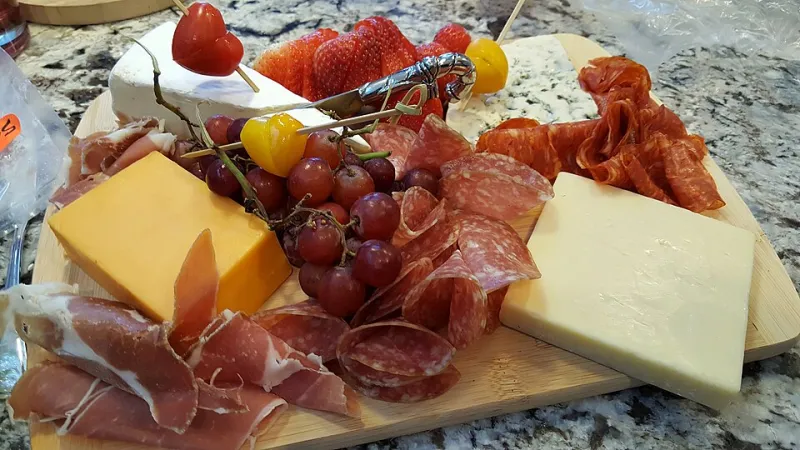
Photo: terri_bateman, CC0, via Wikimedia Commons
Let's be honest about what a charcuterie board is: a wooden plank covered in things Americans can't pronounce, arranged in a way that suggests someone's grandmother in Lyon is watching. We get it. The first time most of us ordered one, we pointed, nodded confidently, and spent the next twenty minutes quietly googling "what is rillettes."
Consider this your cheat sheet. No shame, no snobbery — just a straight answer about what's on that board at ALX Gastropub, why it exists in the first place, and which of the six beers on our draft list to order alongside it.
First, the Word Itself
"Charcuterie" (shar-koo-tuh-ree, and yes, you can say it wrong, we won't blink) is French for "cooked flesh," which sounds like a horror movie but is really just the umbrella term for preserved meats — cured, smoked, potted, and confited. The practice predates refrigeration, which is the whole point. Before freezers, if you wanted pork in March, you had to be clever in October. Salt, smoke, fat, and time did the work that a Frigidaire does now.
So when you see meat on a board at an American gastropub, you're not looking at trendiness. You're looking at thrift with a pedigree.
What's Actually on the Platter
Our board changes with the season and whatever our kitchen crew is excited about, but the core lineup stays pretty steady. Here's the honest breakdown:
The pâté. Think of it as meatloaf's sophisticated cousin who moved abroad. It's finely ground meat (usually pork or chicken liver) blended with fat, herbs, and a splash of something boozy, then baked in a water bath until it's spreadable. If you've ever had chopped liver at a deli, congratulations — you already understand pâté. Ours comes with grilled bread and whole-grain mustard, and the correct move is generous on both fronts.
The rillettes. This is the one nobody knows and everybody loves. Pork shoulder slow-cooked in its own fat until it surrenders, then shredded and packed under a seal of that same fat. It spreads like a rustic pâté but tastes richer, meatier, more forgiving. It's essentially pulled pork's French cousin who never left the farmhouse. Spread it thick. Nobody's measuring.
The cured whole muscle. Whether it's house-cured pork loin or a salami-style link, this is the item that most resembles what people picture when they hear "charcuterie": thinly sliced, deeply seasoned, meant to be eaten in small, satisfying rounds. Chew it slower than you think you need to. That's where the flavor lives.
The pickles. Not decoration. Charcuterie is rich by design — fat is the preservative — so the vinegar-cut vegetables (pickled onion, cornichons, whatever's at the farmers market that week) exist to reset your palate between bites. Skipping them is like watching a movie with the sound off.
The mustard and the bread. The supporting cast that makes the whole thing a meal. Our bread comes from a bakery two blocks off King Street, and we'll let you figure out which one.
Six Beers, Six Bites
Here's where the gastropub part earns its name. We matched each board component to something currently pouring:
- Pâté + our amber lager. The toastiness in an amber plays off the liver's earthiness without bulldozing it. Clean, malty, dependable.
- Rillettes + a Belgian-style saison. The yeast-driven pepper and dry finish slice through all that preserved fat like a knife through — well, rillettes.
- Cured salami + a hoppy pale ale. Cured pork and citrusy hops is a match older than either country's immigration paperwork. Try it once and you'll stop ordering wine with this board forever.
- Pickles + a crisp pilsner. Acid on acid sounds like a mistake, but a dry, snappy pilsner actually amplifies the pickle's brightness instead of fighting it.
- Mustard-heavy bites + a malty porter. Dark beer and sharp mustard is an underappreciated duo — the roastiness rounds off the vinegar's edge.
- The whole board + whatever Virginia IPA the bartender is excited about. Sometimes the pairing is just a person. Ask them.
If You're New, Start Here
Skip the pâté on round one. Not because it's bad — ours is genuinely good — but because rillettes are the gateway. They taste like something you already love (slow-cooked pork, toast, mustard) with just enough novelty to feel like an occasion. Work your way to the pâté on visit two, and by visit three you'll be the person at the table explaining charcuterie to your friends, which, if this article has done its job, is a service you'll now perform for free.
Meat on a wooden board. That's it. That's the secret. But now you know why it tastes like more than the sum of its parts — and exactly what to order with it.