Bread, Cheese, Pickle, Repeat: The Cold Plate We Spent a Year Getting Right
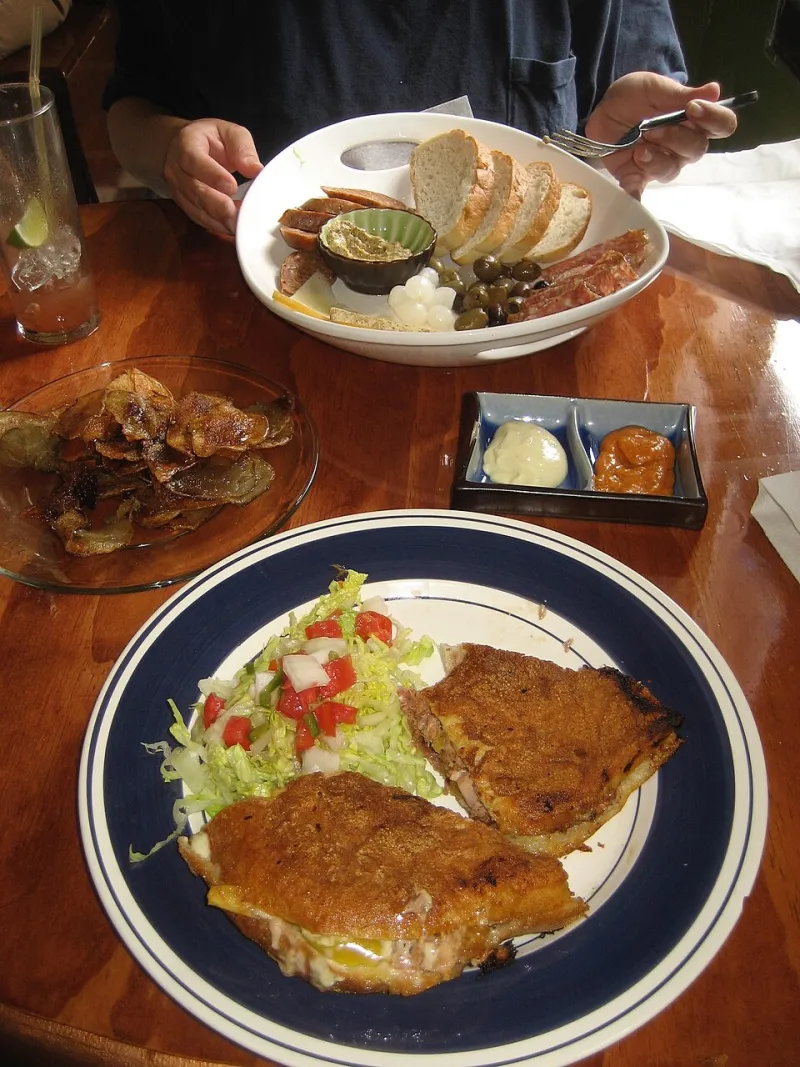
Photo: Infrogmation, New Orleans., CC BY-SA 3.0, via Wikimedia Commons
Here's an uncomfortable truth we've come to love: the Ploughman's Lunch, the dish we just spent a year perfecting, is roughly as ancient as a minivan.
Ask most people and they'll tell you it's a centuries-old English tradition — a plate of bread, cheese, and pickle that farm laborers carried to the fields. It's a lovely story. It's also, historically speaking, a sales pitch. The phrase was popularized in the 1970s as part of a campaign to get Brits eating cheese in pubs. And yet, walking that line between invented tradition and genuine comfort is exactly why the dish belongs on a modern American gastropub menu.
A Meal Invented by a Marketing Meeting
The real history is funnier than the myth. In the years after World War II, cheese consumption in England was sliding. The Cheese Bureau — yes, an actual organization — and later the Milk Marketing Board pushed pubs to serve cheese with bread and pickles, and slapped a wholesome, agrarian name on it. The Ploughman's Lunch was born in a boardroom, not a barley field.
But here's the thing: invented or not, the combination works. It's the original elevated pub fare — no fryer, no fuss, just four excellent ingredients holding each other up. When we started asking why nobody in the DC area was doing this plate seriously, the answer was obvious. Because it's hard. There's nowhere to hide.
The Year of Cheddar
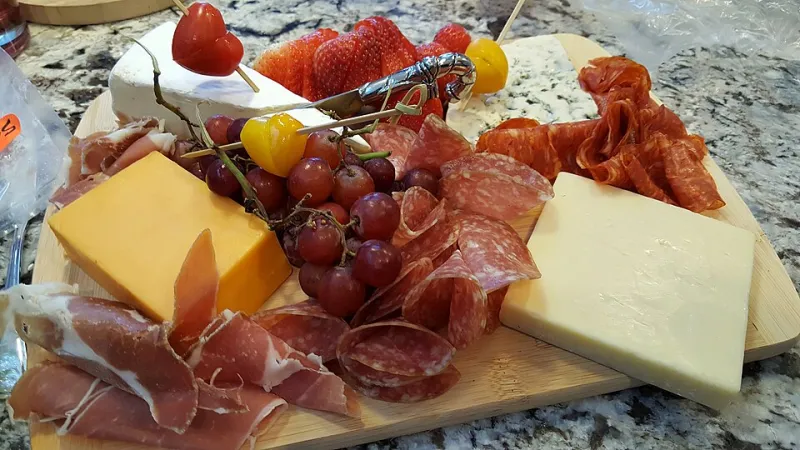
We began, as all good obsessions do, with the cheese. A proper Ploughman's needs a cheddar with backbone — something crumbly, grassy, and sharp enough to stand up to a pint. We tasted our way through the mid-Atlantic before landing on a Virginia farmstead cheddar made in small batches, with the kind of tang you only get from pasture milk.
We serve it in a thick slab, not shavings. This is not a cheese board. This is cheese as the main event.
Pickles, But On Purpose
The pickle component took the longest. Traditional piccalilli — that mustard-yellow British relish — tested well with our kitchen and terribly with our focus group of one (the chef's British mother-in-law, who said ours was "almost respectable"). We settled on a rotating trio: a sharp pickled onion, a seasonal vegetable pickle from whatever the Northern Virginia farmers market is pushing, and a small spoon of that house piccalilli, tuned milder for American palates.
Then there's the bread. We bake it in-house now, a crusty, dense loaf with a dark, malty crust — the kind of bread that demands butter and doesn't apologize. It came out of our spent-grain experiments in the kitchen, and it's honestly half the reason the plate works.
Why a Cold Plate Became a Bestseller
We expected the Ploughman's to be a niche order — the thing food nerds and Anglophiles requested. Instead, it's become one of our most surprising bestsellers, especially at lunch and during that late-afternoon stretch between the workday and dinner service.
We think we know why. It's shareable without being a spread. It's substantial without being heavy. And it's the rare dish that gets better the slower you eat it, especially with an English-style bitter or a Virginia pale ale alongside — the carbonation and hop bite cutting right through the cheddar's richness.
There's also something quietly radical about a plate with no heat involved. In a kitchen full of searing pans and fryers, the Ploughman's is a argument that the pub's original technology — the knife, the barrel, the loaf — still has plenty to say.
Come Try the Accident
So no, the Ploughman's Lunch isn't ancient. It's a 1970s marketing invention that a bunch of American pub cooks fell in love with anyway, then spent a year making it real: Virginia cheddar, pickles from our own jars, bread from our own oven.
Sometimes the fakest traditions make the truest meals. Come argue with us about it over a pint.