Heat Wave, Heavier Plate: The Strange Summer Math of Fish and Chips in Old Town
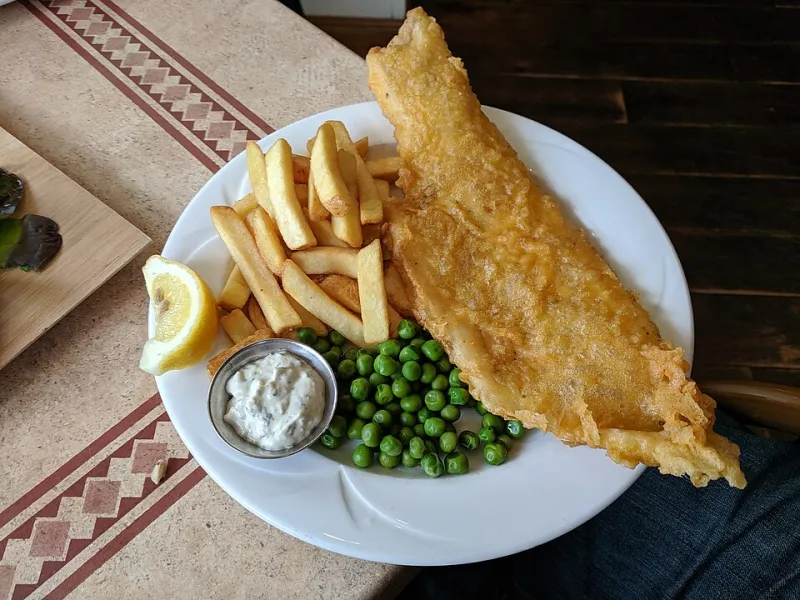
Photo: Grendelkhan, CC BY-SA 4.0, via Wikimedia Commons
Every June, our general manager braces for the same conversation. A server walks into the kitchen and asks whether we can push something lighter for summer — a grain bowl, maybe, or a chilled soup. And every June, our chef points at the point-of-sale screen and says the same thing: look at the fish and chips.
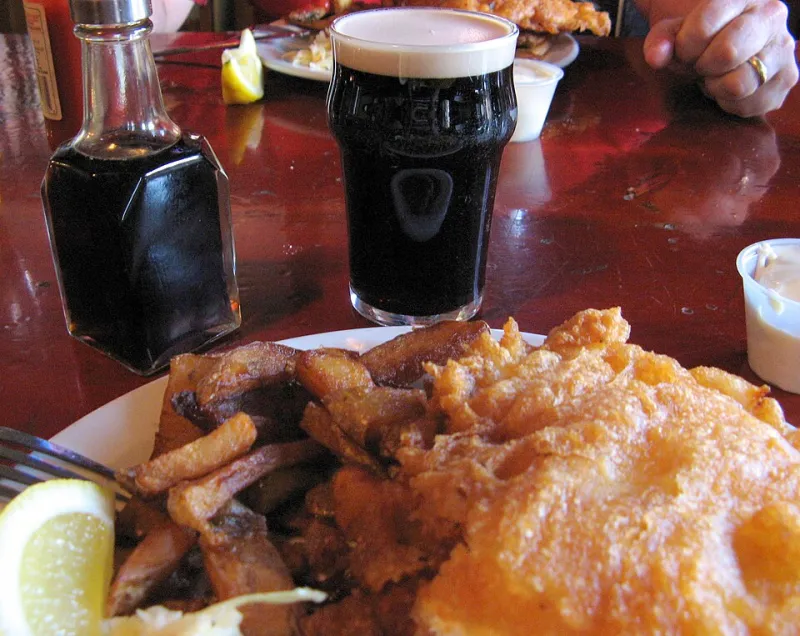
The numbers don't lie, and honestly, they're a little embarrassing for everyone who assumed they knew what Alexandria wants in July. During last summer's heat wave — eleven straight days over 95 degrees — our fish and chips order count went up 34% compared to May. Salads? Down. Gazpacho special we ran for two weeks? Barely moved. The most British, beer-battered, malt-vinegar-drenched item on the menu became our best seller during the muggiest stretch of the year.
The Data Nobody Expected
We pulled three years of sales figures before writing this, because we didn't believe it either. The pattern holds every summer: fish and chips orders spike not in the cooler months, when logic says fried comfort food should reign, but in the hottest weeks of the year. The effect is strongest during heat advisories. The hotter it gets, the heavier people order.
It's not just us, either. A couple of pub owners on King Street told us the same thing happens on their end. One joked that he should just tape a thermometer to the fryer.
Why We Order Heavier When It's Hotter
There's real psychology here, and it runs deeper than stubbornness. For one thing, air conditioning has changed how Americans experience summer. Our dining room sits at a crisp 72 degrees from May through September. Step in off a sweltering sidewalk and your body isn't craving a cold cucumber salad — it's craving the contrast. A hot, crispy, salt-and-vinegar plate in a cold room is the culinary equivalent of a hot shower after a day at the beach.
There's also the vacation effect. Old Town fills up with visitors in July, and people on vacation order differently. They're not eating for efficiency; they're eating for the story they'll tell back home. Nobody texts a photo of a kale salad from Alexandria. Everybody texts the fish and chips with the malt vinegar on the side.
And then there's the simplest explanation: fish and chips is a beach food wearing a pub coat. Boardwalk fry stands, crab shacks, the fish fry tradition — Americans have long associated hot fried seafood with summertime. Our dish reads as seasonal, not heavy. It just happens to come with a pint instead of a paper boat.
How the Kitchen Adapted
Our chef is a pragmatist. Rather than fight the trend, the kitchen started building the dish for July specifically.
First came the pickled onion. Where the winter plate leans on rich, warming elements, the summer version gets a sharp, cold tangle of onions quick-pickled in our house malt vinegar — the same batch we make from spent brewing grain. It cuts through the batter and keeps the plate from feeling like a weighted blanket.
Then, the experiment that divided the staff for a full week: malt vinegar sorbet. It started as a joke during a slow Tuesday prep meeting, became a staff-meal obsession, and eventually landed as a small scoop on the fish and chips plate during peak summer. Tangy, cold, faintly malty — it sounds wrong and tastes like the dish just got a shot of AC. We've learned to stop arguing when the weird thing works.
We also swapped the winter's thick-cut chips for a slightly thinner fry with more surface crunch, and we moved the plate's weight around: same satisfaction, less heaviness at the end of it.
What It Says About Why People Go to Pubs
Here's the part we keep coming back to. The conventional wisdom says pubs are cold-weather businesses — cozy, hearty, built for sweater season. But a pub isn't really a temperature. It's a feeling of being taken care of, and people want that in July just as much as in January. Maybe more.
The heat wave fish and chips spike is, to us, proof that diners aren't actually seeking light food in summer. They're seeking contrast and comfort — a cold room, a cold pint, a hot plate, a table where the server knows the beer list cold. The dish is just the vehicle.
So this summer, when the heat advisory hits and the sidewalks of Old Town empty out, come find us. We'll have the AC blasting, the batter fresh, the vinegar sorbet in the freezer, and a seat waiting. The heaviest plate on the menu will be right there, exactly where you secretly wanted it.