Roasted Barley, Old Dominion: Why the Darkest Beer on Our Tap List Never Leaves Virginia
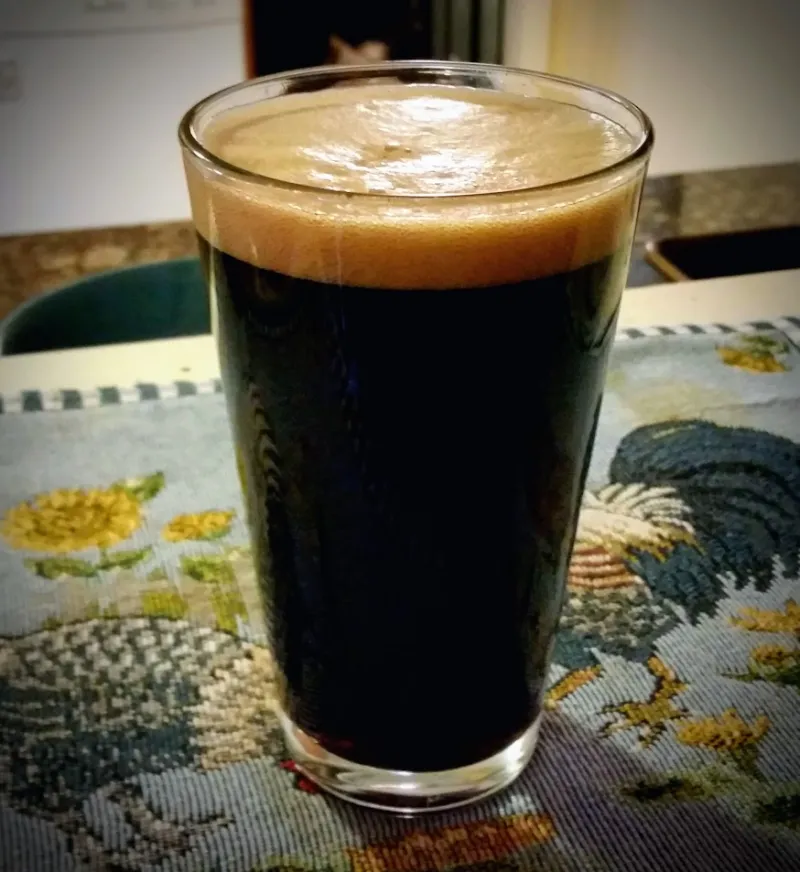
Photo: Zymologist, CC BY-SA 4.0, via Wikimedia Commons
There's a moment every fall when our draft list turns dark. The pilsners retreat, the hazy IPAs thin out, and four taps rotate into something blacker than the Rappahannock at midnight.
Here's the thing, though: none of those stouts come from Dublin. None come from Yorkshire. Every one of them was brewed within spitting distance of King Street.
When we decided to build an all-Virginia stout program, more than a few regulars asked why. Stouts are tradition-bound beers — dry Irish style, nitro pours, centuries of precedent. Why mess with it?
We didn't mess with it. We just looked closer at where tradition actually starts.
The Case for Local Black Beer
A proper dry stout is a spare, almost austere beer: pale malt, roasted barley, a clean English yeast, and not much else. There's no place to hide. Which means the grain matters more than in almost any other style.
That's where Virginia comes in. The commonwealth's craft malting scene has matured fast over the last decade, and growers in the Shenandoah Valley are producing barley that a decade ago would've been trucked in from the UK. Our beer buyer put it bluntly over a recent tasting flight: "If a stout is 90 percent one ingredient, why wouldn't you want that ingredient grown ninety minutes away?"
Freshness is the other half of the argument. Roasted barley loses its edge — that sharp, espresso-like bitterness — as it sits. Beer brewed with locally malted grain and poured within weeks of brewing tastes brighter, drier, more alive than anything that crossed an ocean in a refrigerated container.
What the Brewers Say
We called two NoVA brewers who know dark beer better than anyone and asked them to defend the local approach.
On building a dry stout with Virginia grain: "The first batch was a disaster," one told us, laughing. "Virginia six-row behaves differently than British pale malt. It's got more protein, so you have to watch your mash and your head retention. We spent three batches learning its personality."
The breakthrough came from treating the local grain as an ingredient to showcase, not an imitation to apologize for. Instead of chasing a carbon copy of an Irish draft pour, the brewers leaned into a faintly bready, almost crackery sweetness from the Virginia malt — then let a heavy hand of roasted barley snap it back into dryness.
On the nitro question: The second brewer was more philosophical. "People think nitro is the tradition. Nitro is a marketing invention from the sixties. The tradition is a cask, a cool cellar, and a hand pull. We serve our stout on CO2 at proper cellar temperature, and it tastes more traditional, not less."
We serve ours both ways at the pub — nitro for the cream seekers, cask-conditioned when we can get it — and the side-by-side is one of the best free education programs in Old Town.
Four Virginia Stouts Worth Knowing
Our current rotation covers the full range of what local brewers are doing with dark grain. Order them in this sequence and you'll taste the whole story.
1. The Gateway Pour. A nitro dry stout from a Loudoun County brewery, made with Shenandoah Valley barley. Jet black, coffee-bitter, impossibly smooth. If you think you don't like dark beer, start here. It pairs beautifully with our fish and chips — the roastiness cuts the fried batter like a squeeze of lemon.
2. The Oat Silk. A Richmond-brewed oatmeal stout, slightly rounder and sweeter, with a body like melted chocolate milk. This is the one to drink with our burger; the oats and the beef fat are old friends.
3. The Local Rebel. A Virginia-made foreign extra stout — bigger, boozier, with notes of dark fruit and molasses. Our bartenders call it "dessert with a job." Order it alongside the charcuterie board, especially anything with a sharp aged cheddar.
4. The Wild Card. A rotating tap we give to whatever experimental dark beer our neighbors have on. Last month it was a stout conditioned on Virginia peanuts. Before that, one brewed with spent grains from our own kitchen, milled back into the mash. When we get one of those kegs, we write it on the chalkboard and it's gone in a weekend.
Tradition Is a Moving Target
The stouts that defined the style were themselves products of their geography — London porters brewed for Dublin shipping, adapted, renamed, and remade by the people who drank them. Virginia brewers are doing the same thing right now, with grain from fields you could drive past on your way to a vineyard.
So no, our stouts don't come out of Yorkshire. They come out of Loudoun, Richmond, and a few other spots on the map we're lucky to call neighbors. The gravity is just as dark. The pint is just as honest.
It's just brewed a whole lot closer to the stool you're sitting on.