It Started on a Slow Tuesday: The Chili Mac Our Chef Never Meant to Put on the Menu
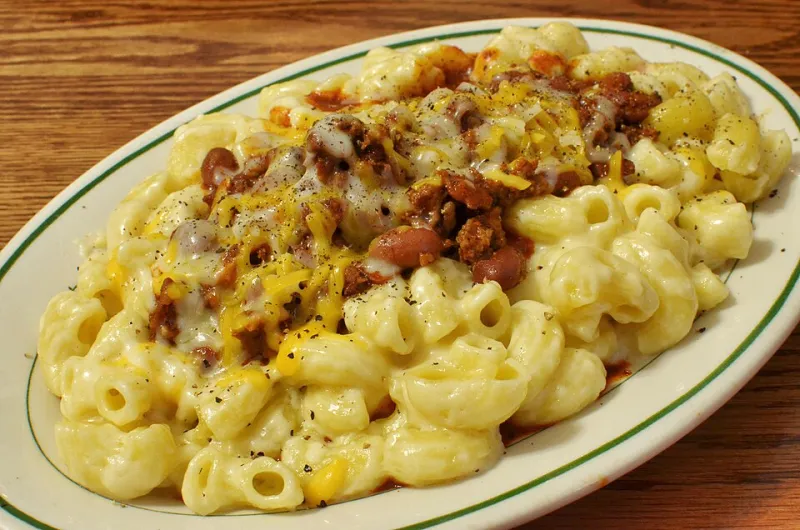
Photo: jeffreyw, CC BY 2.0, via Wikimedia Commons
The Night the Chili Mac Was Born
Ask any line cook what the slowest night of the week is and they'll tell you Tuesday. The deliveries are smaller, the dining room hums instead of roars, and the kitchen has just enough breathing room to get creative. That's exactly where our chili mac came from — not from a menu tasting or a consultant's spreadsheet, but from Chef Marcus raiding the walk-in at 9:40 on a Tuesday because we'd sold out of the shortrib and he was hungry.
He had braising liquid left over from the weekend, a block of sharp cheddar that was one day from being tossed, and a bag of elbow pasta meant for the kids' plates. Twenty minutes later, the whole back of house was standing around the pass eating out of a hotel pan with spoons. No plating. No tweezers. Just cheese pull and silence.
Why It Never Made the Menu
Here's the thing about dishes like this: the moment you formalize them, they change. Portioning gets standardized, food costs get calculated, and suddenly the soul gets portioned out with a scoop. Chef Marcus has refused to print it for three years running. But he's never refused to make it. Ask your server — if the kitchen isn't slammed, there's a decent chance a bowl appears.
That's the honest truth about off-menu items in restaurant kitchens everywhere. They're love letters to the craft, written in leftover braising liquid. Some chefs guard them jealously. Marcus's rule is simpler: he won't sell it, but he'll happily teach it.
The Home Version: What You'll Need
We've scaled this down for a home kitchen. Serves 4 generously.
For the chili base:
- 1 lb ground beef (80/20 — you want the fat)
- 1 yellow onion, diced
- 3 cloves garlic, smashed
- 2 tbsp chili powder, 1 tbsp smoked paprika, 1 tsp cumin
- 1 can (15 oz) crushed tomatoes
- 1 cup beef stock (or, if you're feeling fancy, leftover pot roast liquid — that's the restaurant secret)
- 1 can pinto beans, drained (optional; Marcus says yes, the Texas line cooks say no)
For the cheese sauce:
- 2 tbsp butter, 2 tbsp flour
- 1½ cups whole milk
- 8 oz sharp cheddar, grated by hand (pre-shredded cheese has anti-caking agents that wreck the melt — don't do it)
- 2 oz cream cheese for body
- A splash of hot sauce and a pinch of dry mustard
For the pasta: 12 oz elbow macaroni, cooked a minute shy of the box instructions.
Building It, Step by Step
- Brown the beef hard. Get your pot screaming hot and let the meat develop a crust before breaking it up. Those browned bits are flavor you can't buy.
- Bloom the spices. Add onion, cook until soft, then garlic and all the dry spices for about 60 seconds until they smell fragrant. This step separates a good chili from a flat one.
- Simmer low. Tomatoes and stock go in, then let it bubble gently for 30–45 minutes. Longer is better. Walk away. Watch something dumb on TV.
- Make a real mornay. Melt butter, whisk in flour, cook two minutes, add milk slowly, then cheese off the heat in handfuls. Cream cheese goes in last for that glossy, clingy texture.
- Assemble with intent. Pasta in the bowl, chili ladled over, cheese sauce on top of that. Do not stir it all together in the pot — layering is what makes each bite different from the last.
- Optional but encouraged: a handful of crushed kettle chips or pickled jalapeños for crunch.
Make It Your Own
Swap the beef for ground turkey with an extra glug of the braising-liquid trick, or go full vegetarian with brown lentils and smoked salt. No cheddar? A mix of Monterey Jack and Gruyère is dangerously good. The bones of the dish — hard sear, bloomed spices, layered assembly — are what matter.
And if you'd rather taste the original than cook the imitation, you know where we are. Tuesday's actually a great night to come by.